The label on sunglasses may contain several words: polarized, category 3, UV400, gradient lenses, or ultraviolet protection.
Although they are often listed together, they do not describe the same property. Understanding what UV400 means helps distinguish radiation protection from simply the dark color of the lens.
Ultraviolet radiation is outside the visible range of the human eye. The term UV400 indicates that the lens is designed to filter ultraviolet radiation down to a wavelength of 400 nanometers.
This limit covers the UVA and UVB regions relevant to eye protection. That's why you might also see a label like “100 % UVA and UVB”.
The American Academy of Ophthalmology recommends choosing glasses that block 99 or 100% of UVA and UVB radiation.
The darkness indicates how much visible light the lens lets through. It does not, on its own, indicate the amount of ultraviolet radiation it filters.
A clear lens can provide good UV protection. A very dark lens, if it doesn't meet the necessary specifications, can filter out a lot of visible light and allow ultraviolet radiation to pass through.
That's why it's not advisable to judge sunglasses solely by their color. RNIB reminds us that lens darkness does not determine UV protection.
Polarization reduces certain reflections from water, pavement, or shiny surfaces. UV protection acts on a non-visible part of the radiation.
These are complementary but independent features. A lens can incorporate one, both, or neither.
Categories 0 through 4 classify the amount of visible light that passes through a lens.
A higher category means a darker lens, but not necessarily superior UV protection. All compliant sunglasses should provide the stated level of ultraviolet protection, regardless of whether they are category 1, 2, or 3.
Therefore, a complete description could include:
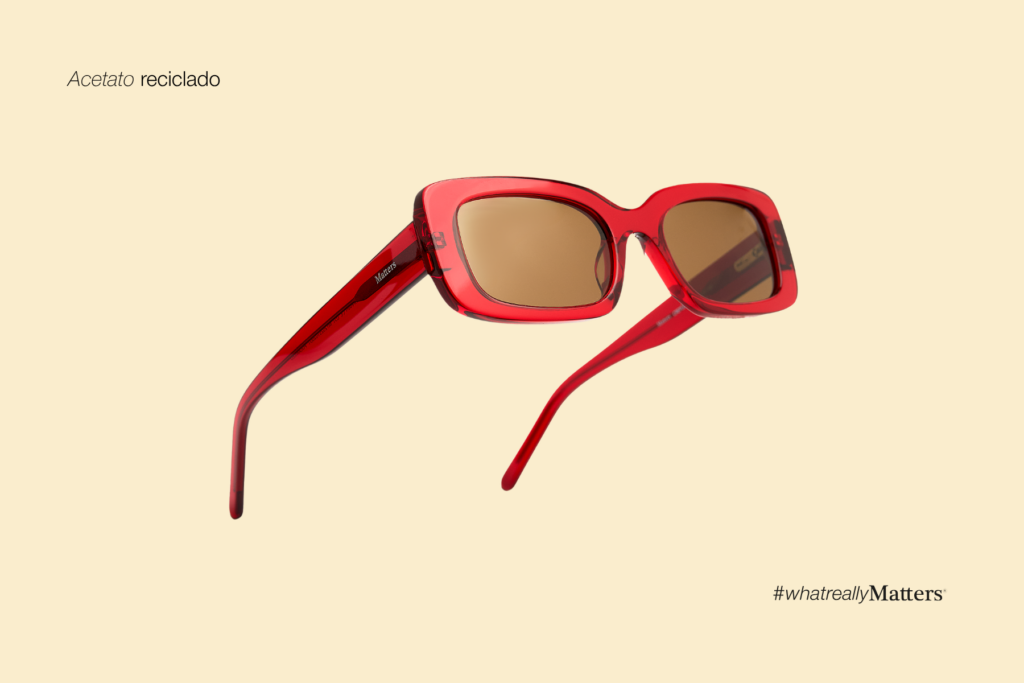
Matters sunglasses combine these three characteristics.
Look for clear information on the product, labeling, or documentation:
In the European Union, the CE marking indicates that the manufacturer declares that the product complies with the relevant legal requirements. It is not simply a decorative element of the packaging.
Home tests using screens or flashlights do not reliably verify ultraviolet filtering. Specific equipment is needed to test old glasses or glasses without clear information.
A lens can provide adequate frontal protection while still allowing light in from the sides. Large, tight-fitting, or wraparound frames reduce side exposure.
It is also advisable to combine glasses with other items, such as hats or visors, especially during prolonged exposures.
No. Ultraviolet radiation is present year-round and can be reflected by water, sand, or snow. Cloudy days don't completely eliminate exposure either.
The choice should depend on the environment, the light and the time you will spend outdoors, not just the season.
UV400 does not describe the style or color of sunglasses. It describes a protective function that should be checked before considering any other details.



 EN
EN  ES
ES