

Turning 40 often comes with small changes. Some are almost imperceptible. Others are more obvious. One of the most common is noticing that you need to hold your phone further away to focus better or that small print isn't as comfortable as it used to be.
If you recognize yourself in this situation, it's very likely that you're starting to experience Presbyopia at 40.
It's not an illness. It's not a one-off thing. It's a natural process of the eye. And understanding what's really happening helps you manage it calmly and sensibly.
The Presbyopia It is the progressive loss of the ability to focus on near objects. It occurs because the crystalline lens—the eye's natural lens—loses elasticity over time.
When we are young, the lens of the eye easily adapts to focus on both near and far objects. From the age of 40-45, this mechanism begins to become more rigid.
Although it can start earlier or later depending on the person, the first symptoms usually appear between the ages of 10 and 11. 40 and 45 years old.
This happens because the lens of the eye naturally loses flexibility, and the focusing system needs to work harder to maintain sharpness at short distances. Furthermore, intensive screen use makes this demand constant.

Beyond intuition, there are clear signs:
The most reliable way to confirm this is through a visual examination. Detecting it early prevents unnecessary discomfort and poor decisions.
Once presbyopia appears, it doesn't go away. But it can be easily corrected.
They are the simplest and most practical solution for close-up vision tasks: reading, using a mobile phone or working in front of a computer.
They correct both distance and near vision in the same lens.
In some cases they can be an alternative.
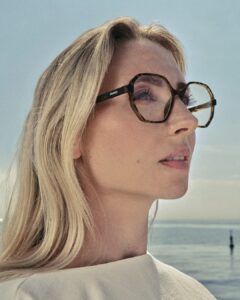
Not all glasses are the same. When you start needing them, it's important to consider certain aspects:
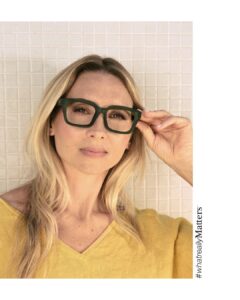
Decades ago, presbyopia was mainly associated with reading on paper. Today we spend hours in front of computers, tablets, and mobile phones.
Not because technology causes presbyopia, but because it requires constant effort to focus up close. That's why choosing comfortable, lightweight, and well-designed glasses isn't just about aesthetics: it's about function.
Presbyopia is a natural part of aging. It's not a loss, it's a natural adaptation of the body.
Managing it in time allows you to read comfortably, work without eye strain, and maintain good visual quality on a daily basis.
And doing it with well-designed glasses turns that need into part of your routine, not a nuisance.
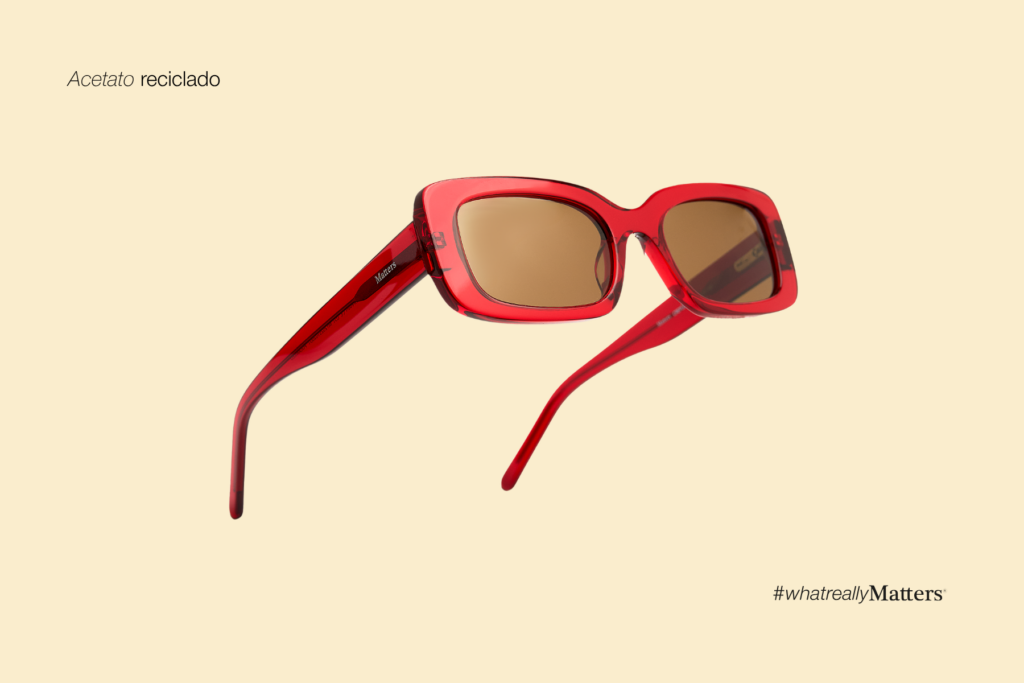
Choosing suitable, comfortable reading glasses made with responsible materials is a practical way to take care of your vision and your environment at the same time.
Seeing well after 40 is not a luxury. It's a natural adaptation.
And doing it intentionally also matters.


 EN
EN  ES
ES